
Therapies for PTSD – EMDR, CBT, and Trauma-Focused Therapy
With the right approach, you can effectively manage Post-Traumatic Stress Disorder (PTSD). This blog post explores three prominent therapies: Eye Movement Desensitisation and Reprocessing (EMDR), Cognitive Behavioural Therapy (CBT), and Trauma-Focused Therapy. Each method offers distinct benefits tailored to your specific needs, helping you to process trauma and reduce its impact on your life. Understanding these therapies will empower you to choose the path that suits you best and aids your recovery journey.
Key Takeaways:
- EMDR (Eye Movement Desensitisation and Reprocessing) helps process traumatic memories through bilateral stimulation.
- CBT (Cognitive Behavioural Therapy) focuses on changing negative thought patterns and behaviours associated with PTSD.
- Trauma-Focused Therapy involves addressing the trauma directly, often integrating multiple therapeutic approaches.
- Each therapy can be effective; choice may depend on individual preferences and specific symptoms.
- Outcomes improve when therapies are tailored to suit the client’s unique experiences and needs.
- Therapeutic alliance and trust between therapist and client significantly influence treatment success.
- Combining therapies or integrating medication can enhance recovery for some individuals.
Dissecting the Mechanics of EMDR
EMDR operates on the premise that traumatic memories can interfere with your mental health, leading to debilitating symptoms. By integrating specific eye movements into therapy sessions, EMDR aims to facilitate the processing of these memories, allowing your mind to reframe and reduce the emotional intensity associated with them.
The Eye Movement Process and Its Purpose
The eye movement aspect of EMDR involves following a therapist’s hand or other moving stimulus with your eyes. This bilateral stimulation is thought to mimic the natural processing mechanisms of your brain during REM sleep, thereby enhancing your ability to work through distressing memories in a safe environment.
Clinical Evidence Supporting EMDR’s Efficacy
Numerous studies demonstrate the effectiveness of EMDR in treating PTSD, with a significant proportion of participants reporting reduced symptoms after just a few sessions. Research published in the Journal of Traumatic Stress indicates that EMDR can lead to a reduction in PTSD symptoms by up to 84%, with long-lasting effects.
Further validation of EMDR’s efficacy can be observed in a meta-analysis by the Cochrane Collaboration that reviewed over 30 studies involving thousands of participants. The analysis concluded that EMDR is more effective than no treatment and comparable to traditional therapies such as CBT. Additionally, a randomised controlled trial demonstrated that over 77% of participants no longer met the criteria for PTSD after completing the EMDR protocol. Such evidence reinforces the therapy’s utility, highlighting it as a viable option for those seeking to alleviate the impacts of trauma.
Cognitive Restructuring: The Power of CBT
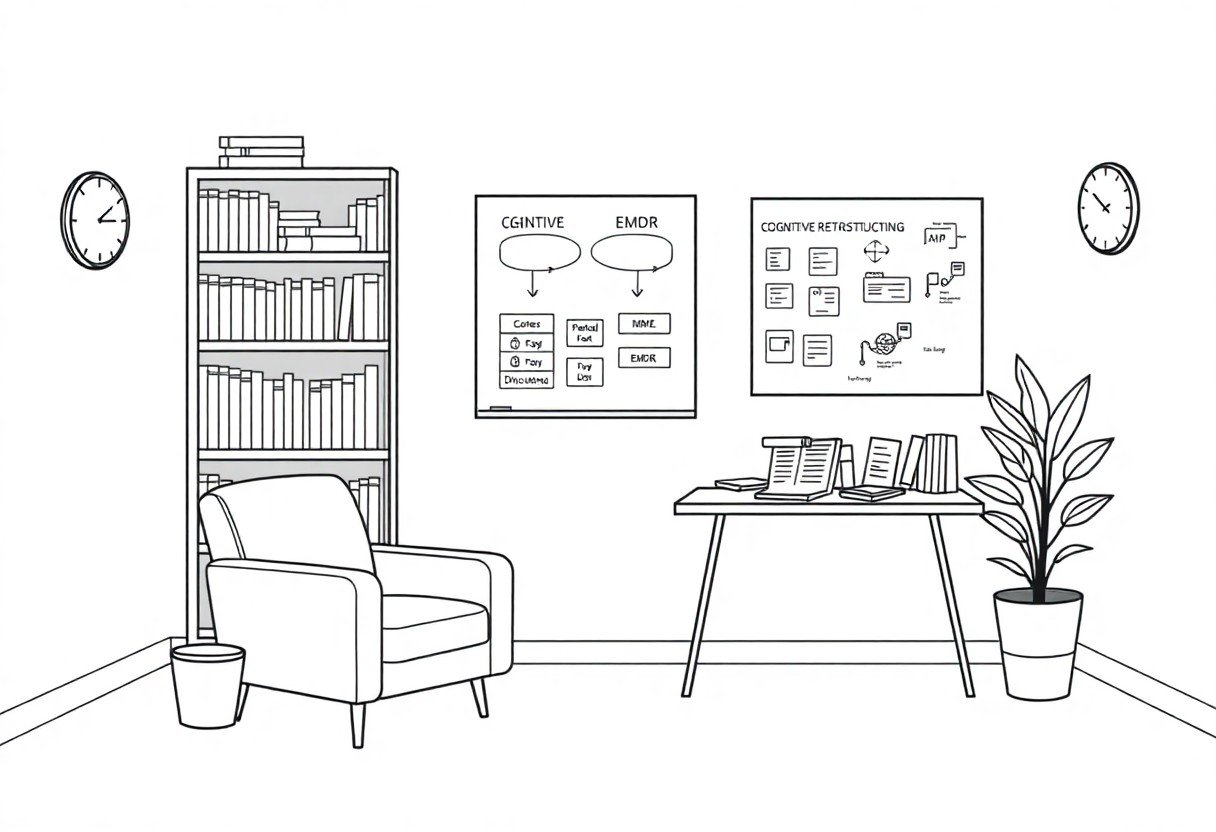
CBT, or Cognitive Behavioural Therapy, empowers you to challenge and reshape your thought patterns, particularly those rooted in trauma. By engaging in structured exercises, you can identify negative beliefs and biases, replacing them with more balanced, rational perspectives. This process not only helps reduce symptoms of PTSD but fosters resilience, enabling you to face future challenges with enhanced coping strategies.
How CBT Targets Negative Thought Patterns
Through techniques like cognitive restructuring, CBT prompts you to examine the validity of your thoughts. You learn to recognise maladaptive thoughts—such as self-blame or catastrophic thinking—and understand how these distorted views contribute to your emotional distress. By reframing these thoughts, you can experience a shift in your mood and behaviour, paving the way for recovery.
Measurable Outcomes in PTSD Treatment
CBT has been shown to produce quantifiable improvements in PTSD symptoms, with studies indicating a significant reduction in the severity of symptoms following treatment. Many clients report a decrease in flashbacks, anxiety levels, and overall distress, allowing for better functioning in daily life.
CBT effectiveness is often highlighted through various studies, with meta-analyses revealing that approximately 60-75% of participants experience significant symptom reduction after completing treatment. Standardised assessment tools, such as the Clinician-Administered PTSD Scale (CAPS), are frequently employed to gauge improvements, revealing that patients may score lower on PTSD symptom scales post-treatment. Furthermore, the durability of these outcomes is notable, with research indicating that many individuals maintain their gains long after therapy has concluded, demonstrating the lasting impact of reshaping thought processes.
The Therapeutic Journey Through Trauma-Focused Therapy
Your journey in trauma-focused therapy is a profound exploration of your experiences and emotions. This form of therapy encourages you to confront and process traumatic memories, allowing you to gain a better understanding of their impact on your life. By engaging with a trained professional, you’ll learn to organise your feelings, which paves the way for healing and resilience over time.
Integrative Approaches: Combining Words and Emotions
Integrating verbal discussions with emotional expression enhances your therapeutic experience. This approach helps you articulate your trauma while also connecting with the emotions that arise. Techniques such as art therapy or expressive writing allow you to express feelings that may be difficult to verbalise, fostering a richer understanding of your emotional landscape.
Long-Term Effects on Recovery and Resilience
Engaging in trauma-focused therapy promotes lasting recovery and resilience. By addressing your trauma directly, you may find improvements not just in mental health symptoms, but also in your overall quality of life. Clients often report enhanced emotional regulation and increased coping strategies, which collectively contribute to a stronger, more resilient self.
Research indicates that individuals who actively participate in trauma-focused therapy exhibit a remarkable reduction in PTSD symptoms over time, with studies showing that up to 60% of participants experience significant improvements within six months. Moreover, the skills you develop through therapy can empower you to face future challenges, fostering a sense of hope and purpose. The holistic nature of these therapeutic practices cultivates an environment where you can continuously build your emotional toolkit, enhancing your resilience long after therapy has concluded.
Comparing Therapeutic Modalities: Which Works Best?
| Therapy Type | Effectiveness |
|---|---|
| EMDR | 85% show significant improvement |
| CBT | 70% report reduced symptoms |
| Trauma-Focused Therapy | 75-80% experience positive outcomes |
A Side-by-Side Analysis of Effectiveness
Direct comparisons reveal that EMDR tends to yield the highest rates of significant improvement, with around 85% of participants reporting a decrease in PTSD symptoms. CBT follows, with 70% finding relief, while Trauma-Focused Therapy achieves positive results for 75-80%. Choosing the most effective approach depends on individual experiences, specific trauma, and personal preferences.
Personalisation of Therapy: Finding the Right Fit
Therapy effectiveness can significantly increase when you consider personalisation. You may resonate more with certain approaches based on your unique experiences, learning style, and personality. Therefore, identifying the right fit is vital for successful treatment.
Your journey through therapy is uniquely yours, making the choice of modality even more critical. For instance, some individuals flourish in more structured environments offered by CBT, appreciating its cognitive frameworks, while others may benefit from the more exploratory nature of EMDR or Trauma-Focused Therapy. The compatibility between you and your therapist also plays a vital role—an open dialogue about your preferences and reactions to therapy can lead to an adaptation of the approach that best supports your healing process.
Beyond Therapy: Supplementary Strategies for Managing PTSD
While therapy forms the backbone of PTSD treatment, incorporating supplementary strategies can enhance your recovery journey. These strategies often revolve around lifestyle modifications and building supportive relationships, empowering you to manage symptoms more effectively and build resilience in the face of adversity.
Lifestyle Changes and Their Impact on Recovery
Adopting positive lifestyle changes can significantly enhance your recovery from PTSD. Integrating regular exercise, a balanced diet, and sufficient sleep into your routine fosters not only physical well-being but also improves your emotional stability. Studies have shown that aerobic exercise can reduce anxiety and depression, both common in PTSD, while mindfulness practices, such as yoga and meditation, cultivate a sense of calm, aiding in emotional regulation.
Community and Support Systems: The Role of Connection
Strong community ties and support systems play a transformative role in your recovery from PTSD. Engaging with others who understand your experiences can provide comfort and a sense of belonging. Participating in support groups or connecting with friends and family creates avenues for sharing feelings, fostering empathy, and reinforcing your social network, which is vital for emotional health.
A research study indicated that individuals with robust support systems are 50% more likely to experience a reduction in PTSD symptoms compared to those isolated. Engaging with community resources, such as local mental health organisations or peer support groups, can offer structured environments where you can share your journey and learn from others. Building these connections not only helps mitigate feelings of loneliness but also instils hope and encouragement as you navigate your path to recovery.
Conclusion
Drawing together the findings on therapies for PTSD, you can benefit from approaches such as EMDR, CBT, and Trauma-Focused Therapy. Each method offers unique techniques aimed at addressing your experiences and emotions related to trauma. By engaging with these therapies, you can develop coping strategies and gain a deeper understanding of your feelings, leading to a significant reduction in PTSD symptoms. Choosing the right approach can empower you to reclaim your life and enhance your overall well-being.
FAQ
Q: What is EMDR and how does it help with PTSD?
A: Eye Movement Desensitisation and Reprocessing (EMDR) is a psychotherapy that helps individuals process and integrate traumatic memories. It involves guided eye movements while the patient recalls distressing events, aiding in reducing the emotional intensity associated with those memories and facilitating recovery from PTSD.
Q: How does Cognitive Behavioural Therapy (CBT) assist in the treatment of PTSD?
A: Cognitive Behavioural Therapy (CBT) is a structured, time-limited therapy that focuses on changing negative thought patterns and behaviours. For PTSD, it helps individuals challenge and reframe their beliefs about trauma, manage anxiety, and develop coping strategies to deal with triggers and flashbacks.
Q: What is Trauma-Focused Therapy and its approach to addressing PTSD?
A: Trauma-Focused Therapy is an umbrella term for therapies specifically designed to address trauma-related symptoms. It involves talking through the trauma in a safe environment and may include various techniques such as psychoeducation, cognitive restructuring, and emotional regulation, tailored to meet the individual’s needs.
Q: Are these therapies effective for everyone with PTSD?
A: While EMDR, CBT, and Trauma-Focused Therapy are effective for many individuals, their success can vary based on personal circumstances, the nature of the trauma, and individual responsiveness to treatment. Personalised treatment plans and professional guidance are important for optimal outcomes.
Q: How long does it typically take to see results from these therapies?
A: The duration of therapy and time to see results can differ widely among individuals. Some may experience improvements within a few sessions, while others may require several weeks or months of consistent therapy. A mental health professional can provide a more tailored estimate based on individual progress and needs.